
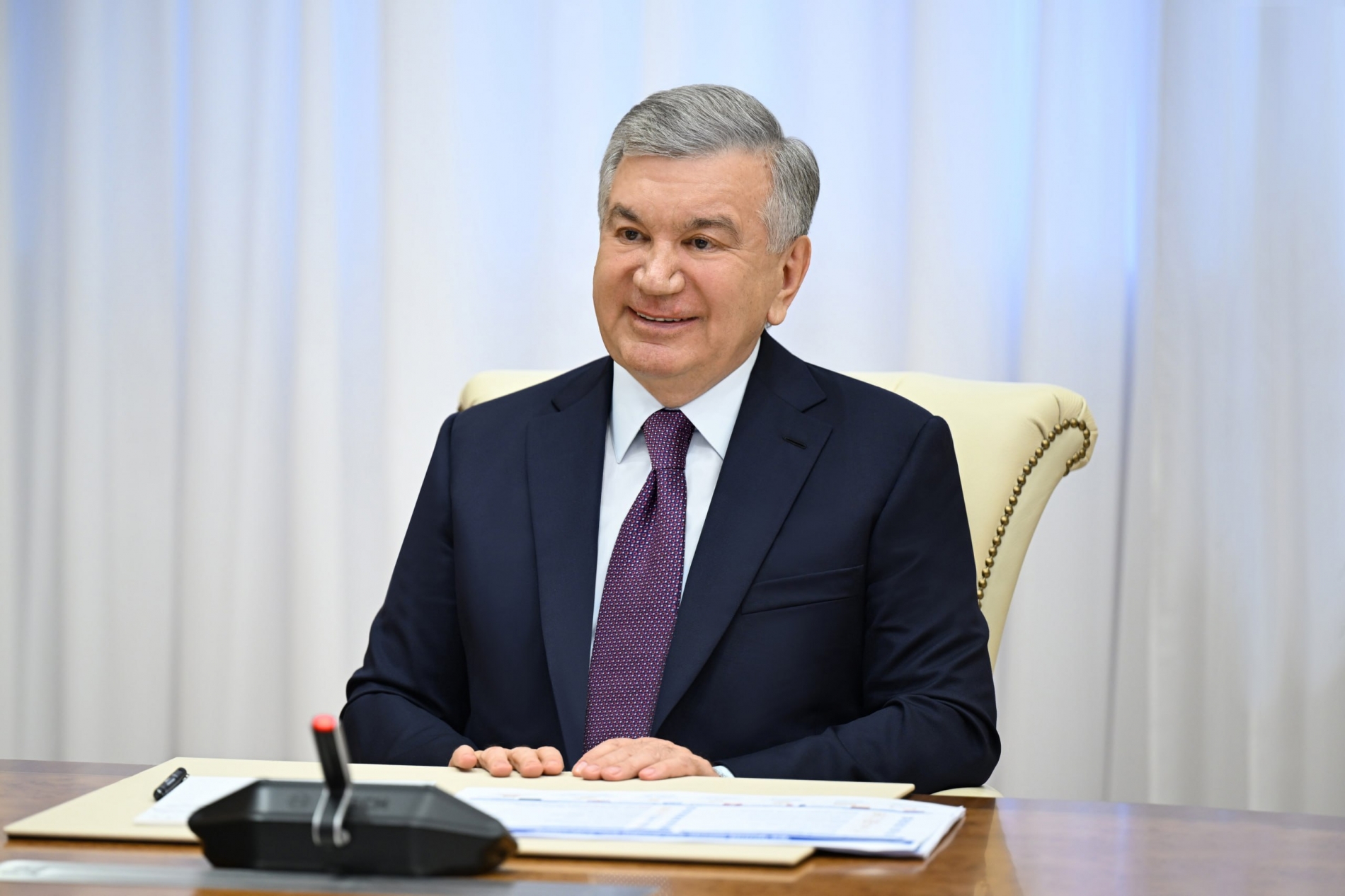
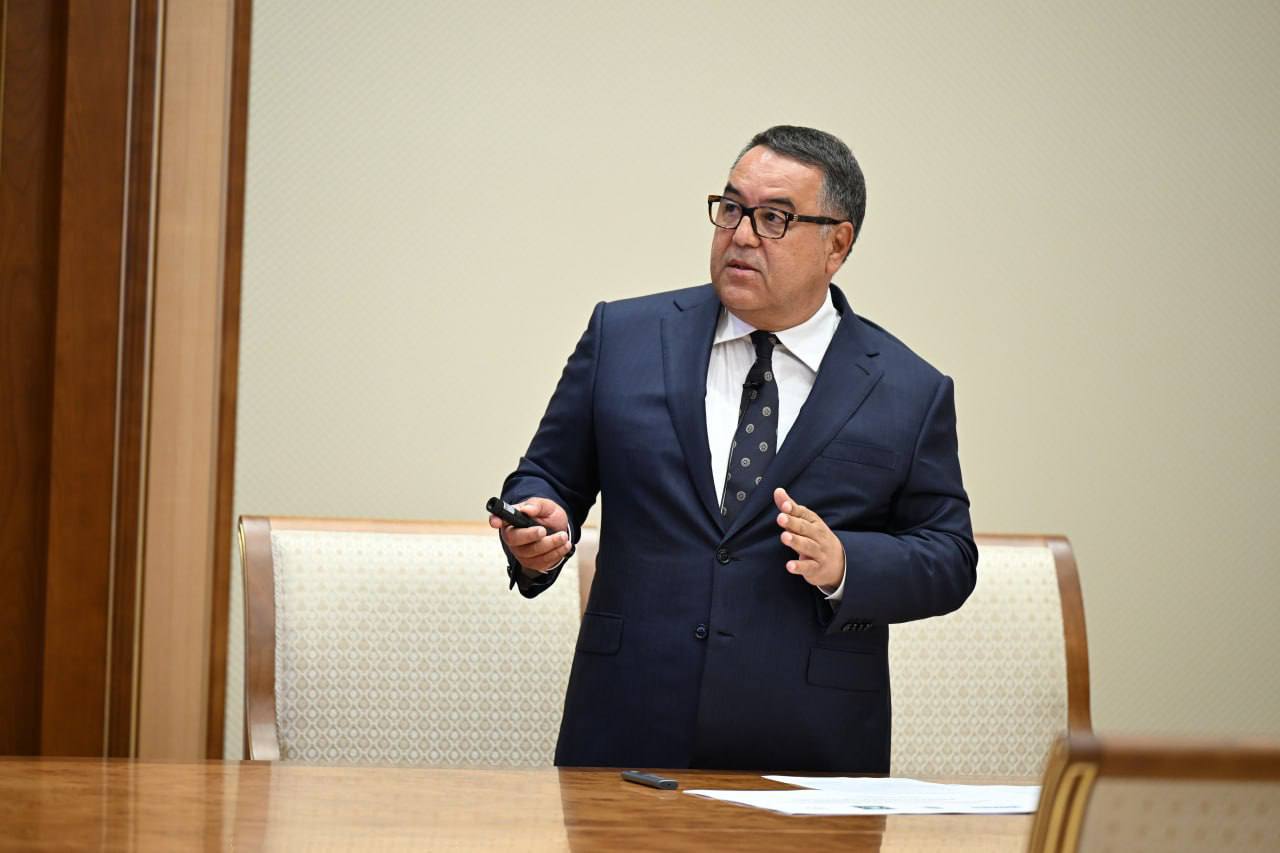
President Shavkat Mirziyoyev was presented with a report on the achievements of the Center for Islamic Civilization in Uzbekistan and its plans for further development.
In Uzbekistan, special attention is paid to strengthening national identity, the in-depth study of the country’s rich historical and spiritual heritage, and the broad international promotion of the scientific heritage of its great scholars. The Center for Islamic Civilization in Uzbekistan is being established as a modern cultural and educational platform of national and international significance.
Information on the work carried out by the center was presented at the presentation.
On March 17 of this year, the center officially opened in its magnificent building. As of June 1, it had been visited by half a million local and foreign guests. The average daily number of visitors is about 6,000 people. During this period, the Center was visited by more than 150 foreign delegations and over 2,000 foreign guests.
A Children’s Museum has been established within the Center, and the innovative Imam Bukhari Museum has begun operations. The building houses the International Research Center of Imam Maturidi, and a team of guides and visitor attendants has been organized.
In the fields of science and innovation, 810 projects have been implemented with the participation of around 2,000 domestic and international scholars.
The Center regularly hosts conferences, seminars, roundtable discussions, master classes, and book presentations. To date, more than 5,000 people have taken part in these events.
Significant work has also been carried out on the repatriation of cultural heritage. More than 1,000 artifacts have been returned to Uzbekistan. The Center’s library collection continues to expand and now contains more than 3,000 rare publications, including 762 intended for persons with disabilities. The collection is being digitized, whileelectronic identification technologies are being introduced.
Modern technologies and digital innovations are being widely integrated into the Center’s work. Robot guides have been introduced for visitors, while multimedia and interactive technologies have been incorporated into the exhibitions.
The Center has been recognized by Guinness World Records as the world’s largest museum of Islamic civilization.
The presentation also reviewed future plans for the Center’s development.
First and foremost, issues related to taking research and publishing activities to a new level were discussed. Plans include securing the inclusion of the Center’s scientific journal in the international Scopus and Web of Science databases, creating a unified platform for scientific centers, and developing a digital catalog of manuscripts.
Plans were also presented to establish the Islamic Enlightenment scholarship for master’s and doctoral students in the religious and educational sphere and to organize presentations of books by internationally renowned scholars and experts. At the next stage, it is planned to engage 20,000 young people and representatives of the religious and educational sphere, including imam-khatibs and otinoyis, in the Center’s activities.
Further measures for the repatriation of cultural heritage were also considered. The President noted the need to establish a permanent mechanism for the search, identification, scientific study, expert evaluation, negotiation, and repatriation of rare artifacts related to Uzbekistan that are found at international auctions, in museums, private collections, and on international art markets.
It is also planned to establish a system for the continuous monitoring of Uzbekistan’s cultural heritage around the world, create a unified digital database and an international registry of cultural heritage objects, and establish a modern research laboratory unparalleled in Central Asia.
In this area, work will continue on collections related to Uzbekistan’s cultural heritage held in countries such as China, the United States, Germany, France, and the United Kingdom.
Plans to enhance media and international promotion were also discussed.
It is planned to hold the First International Islamic Forum under the theme “Islamic Civilization: The Path of Peace, Tolerance, and Enlightenment.” In addition, special presentations dedicated to the Center for Islamic Civilization and the scientific heritage of Imam Bukhari, Imam Maturidi, and Imam Tirmidhi are planned at United Nations offices in New York and Geneva, as well as at UNESCO Headquarters in Paris.
President Shavkat Mirziyoyev instructed responsible officials to organize presentations of the Center in 55 countries, hold an international conference and exhibition on the theme “The Role of Women in Islam,” and implement joint scientific and educational projects with the Oxford Centre for Islamic Studies, ICESCO, IRCICA, TURKSOY, and other international organizations.
To strengthen cooperation with foreign journalists and international media organizations, press tours, international media clubs, and media forums will be organized. To strengthen the Center’s global brand, photo exhibitions, thematic presentations, and roundtable discussions will be held at diplomatic missions abroad.
Issues related to creating more convenient conditions for pilgrims and tourists visiting the Imam Bukhari Memorial Complex, ensuring the orderly and meaningful organization of visits, and improving information and guide services were also considered.
The Head of State approved the presented proposals and emphasized that the Center for Islamic Civilization should become a place that showcases to the world the rich cultural heritage of the Uzbek people, their traditions of enlightenment, and the spiritual progress of New Uzbekistan.
The President instructed responsible officials to ensure the systematic development of the Center’sactivities, expand research and publishing efforts, establish a permanent mechanism for the repatriation of cultural heritage, enrich museum collections, introduce digital technologies, and elevate international media promotion to a new level.