
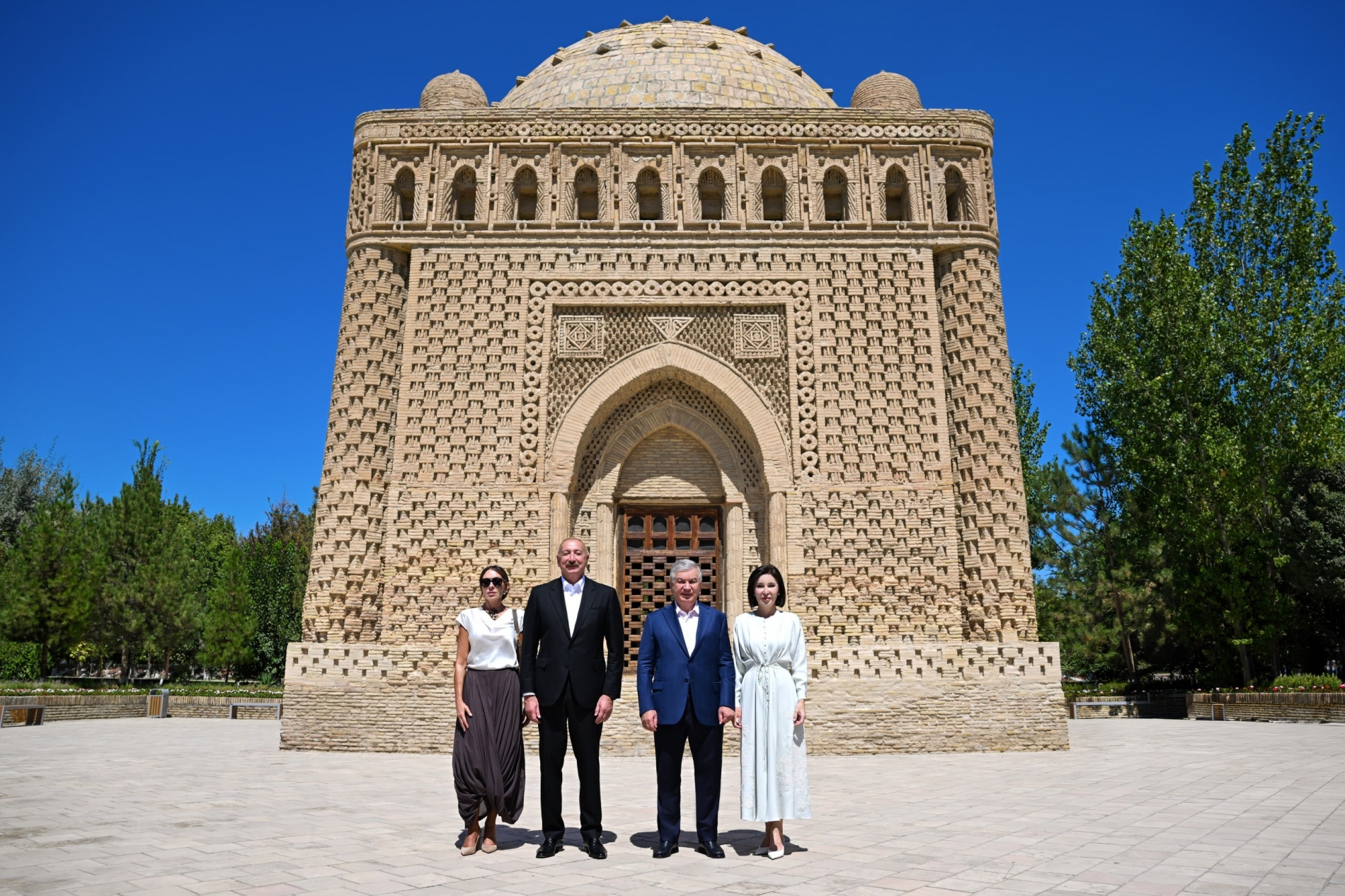
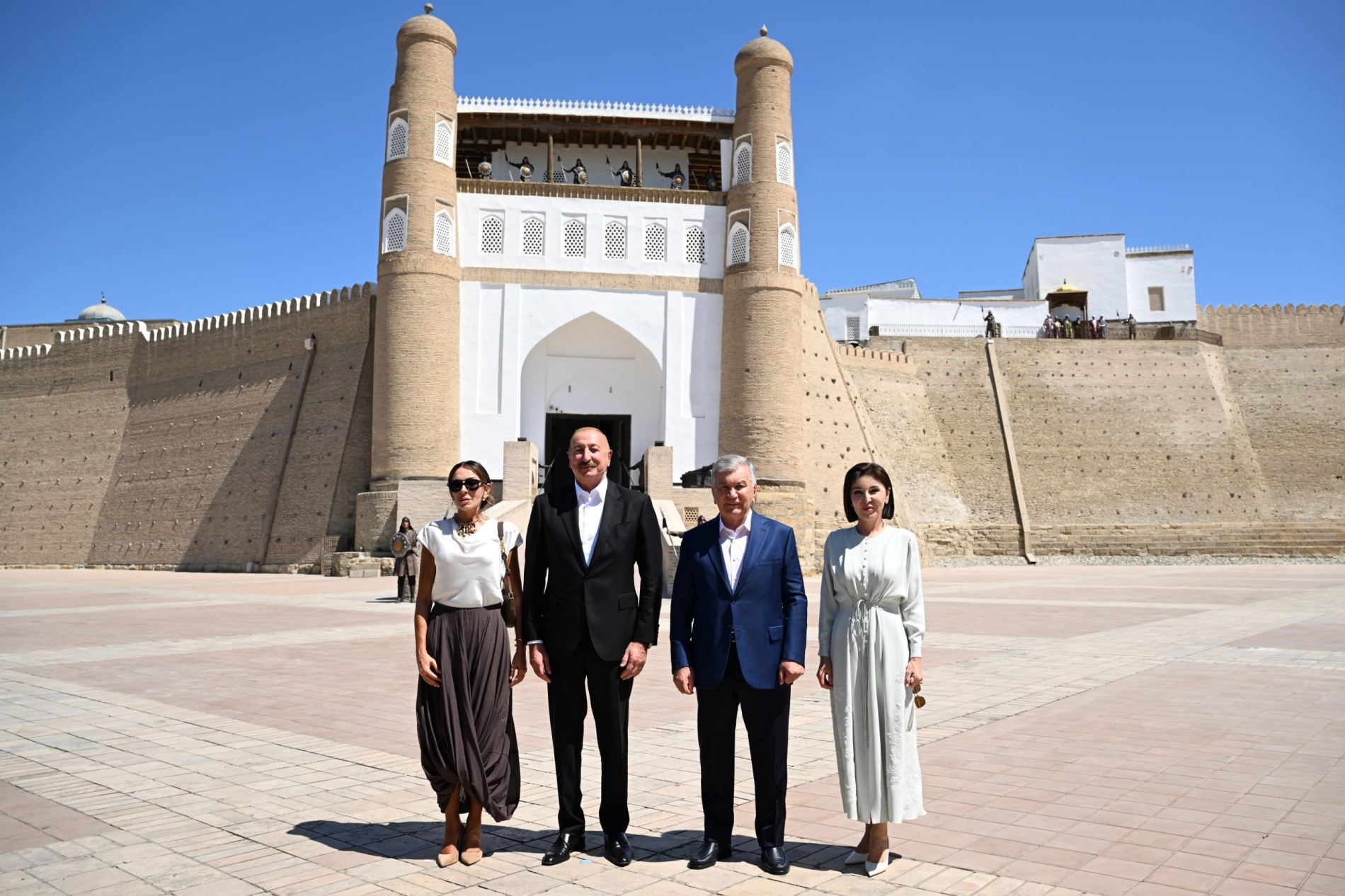
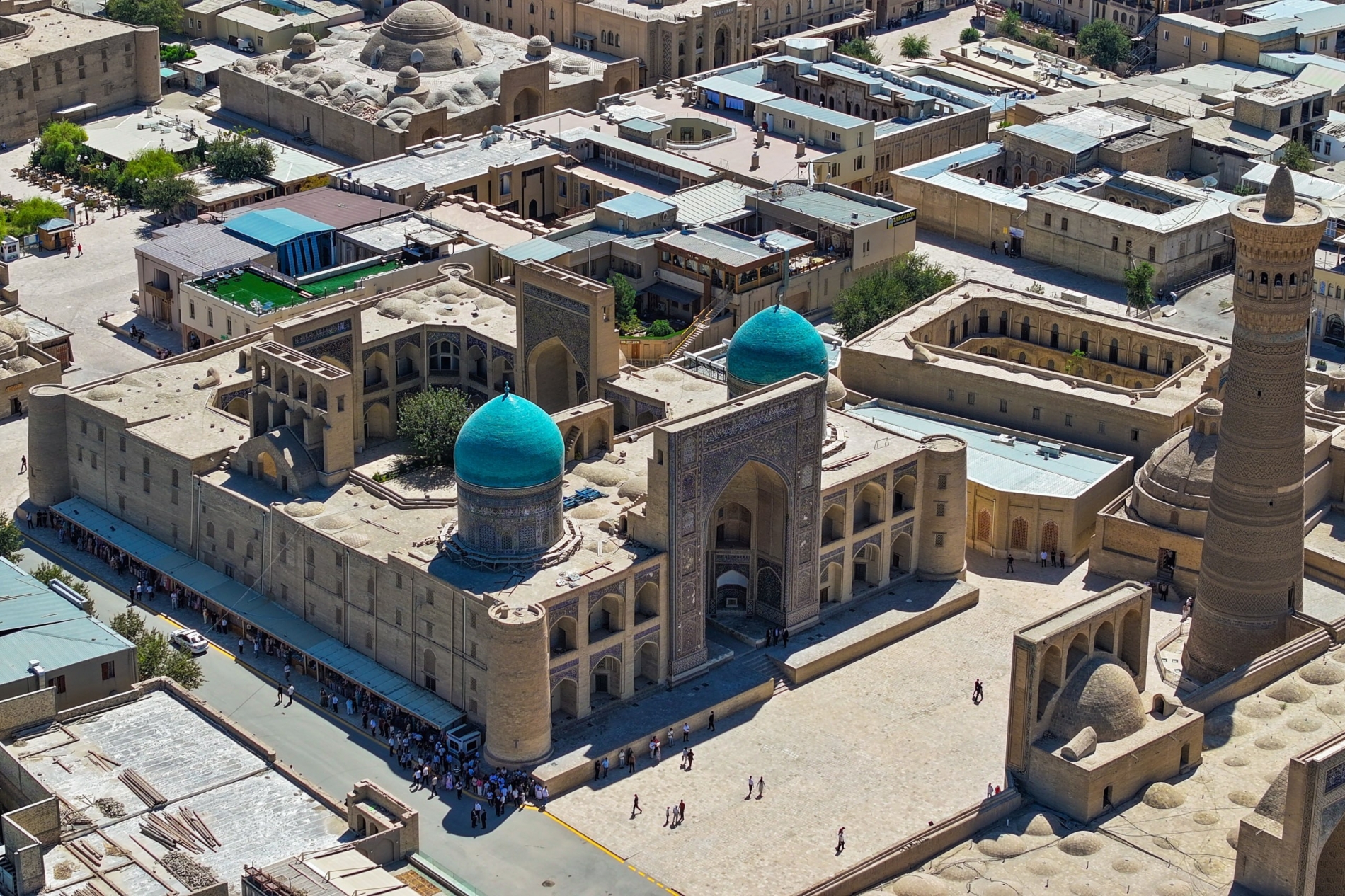
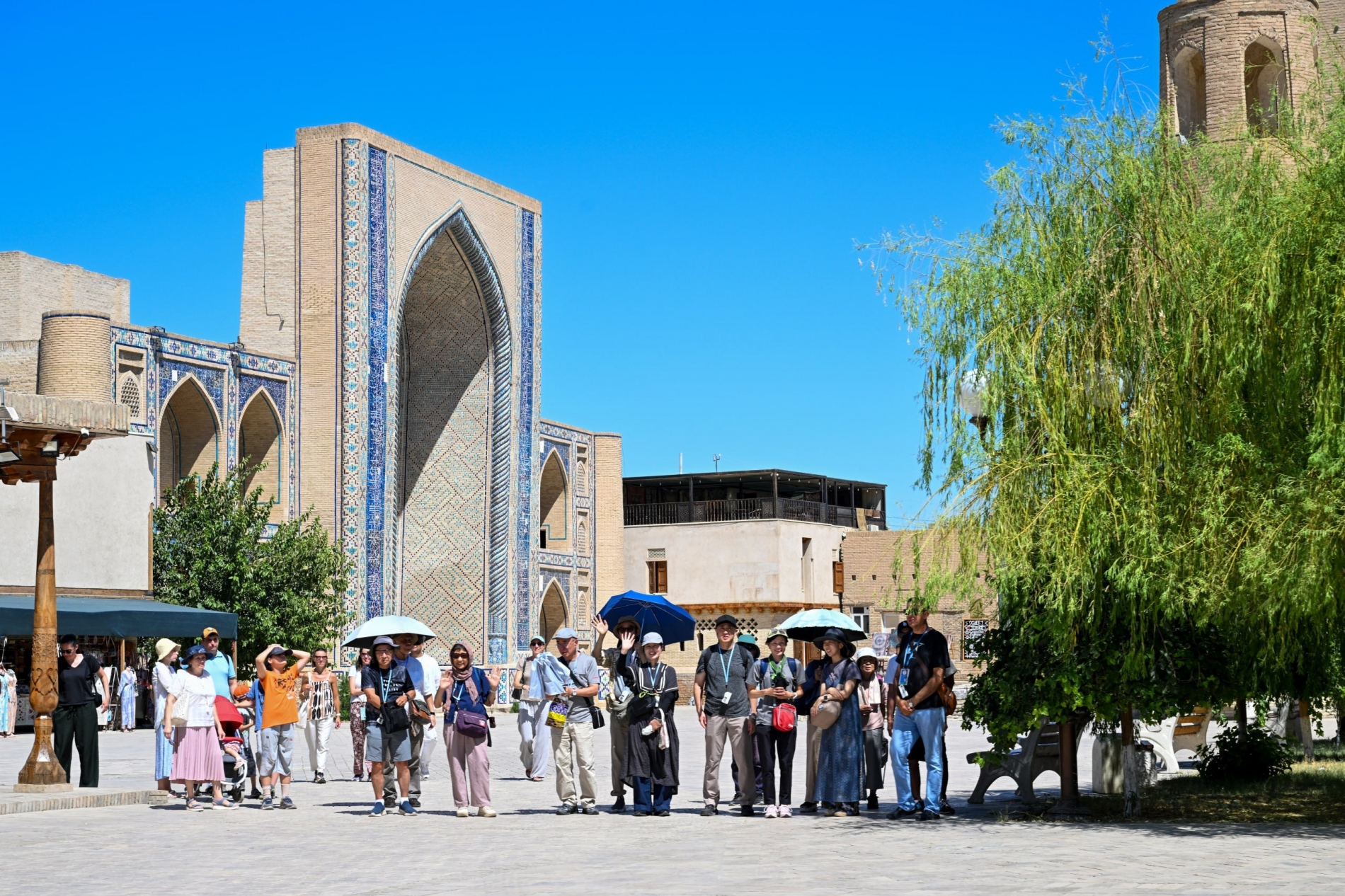
President Shavkat Mirziyoyev and President Ilham Aliyev, accompanied by their spouses, visited Bukhara’s world-renowned monuments, including the Samanid Mausoleum, the Ark Fortress, the Poi-Kalon and Labi-Hauz ensembles, and the Kukeldash Madrasah.
The distinguished guests were provided with detailed information about the history and architectural features of these unique monuments, as well as their significance in the development of science, culture, and urban planning in the East.
The tour began at the Samanid Mausoleum, built by Ismail Samani as a family tomb. In 1993, the mausoleum was included in the UNESCO World Heritage List.
The leaders then visited the Ark Fortress, an ancient citadel that served for centuries as Bukhara’s political and administrative center. Archaeological and historical evidence indicates that the fortress took shape over an extended period and, in its later form, served as the residence of Bukhara’s rulers. Today, the Ark remains one of the city’s principal symbols and an important part of Bukhara’s historic center.
The Poi-Kalon ensemble is one of Central Asia’s most magnificent architectural complexes. Its dominant feature is the famous Kalon Minaret, erected in 1127, which for centuries not only dominated Bukhara’s skyline but also served as a true symbol of the city.
The ensemble also includes the early 16th-century Kalon Mosque and the Mir-i-Arab Madrasah. This complex is rightly regarded as one of the principal architectural gems of historic Bukhara from the Shaybanid period.
The distinguished guests were particularly impressed by the Labi-Hauz ensemble, one of the most recognizable public spaces in old Bukhara, formed around an ancient pond.
It includes the Kukeldash Madrasah and the khanqah and madrasah of Nadir Divan-begi. For centuries, this corner of the city has attracted residents, travelers, and scholars and has retained the unique atmosphere of medieval Bukhara to this day.
During the visit, examples of folk crafts, elements of traditional decorative art, and features of the monuments’ artistic ornamentation were also presented.
The Azerbaijani guests were briefed on Bukhara’s centuries-old history as one of the largest centers of Islamic civilization, science, education, and trade along the Great Silk Road.