
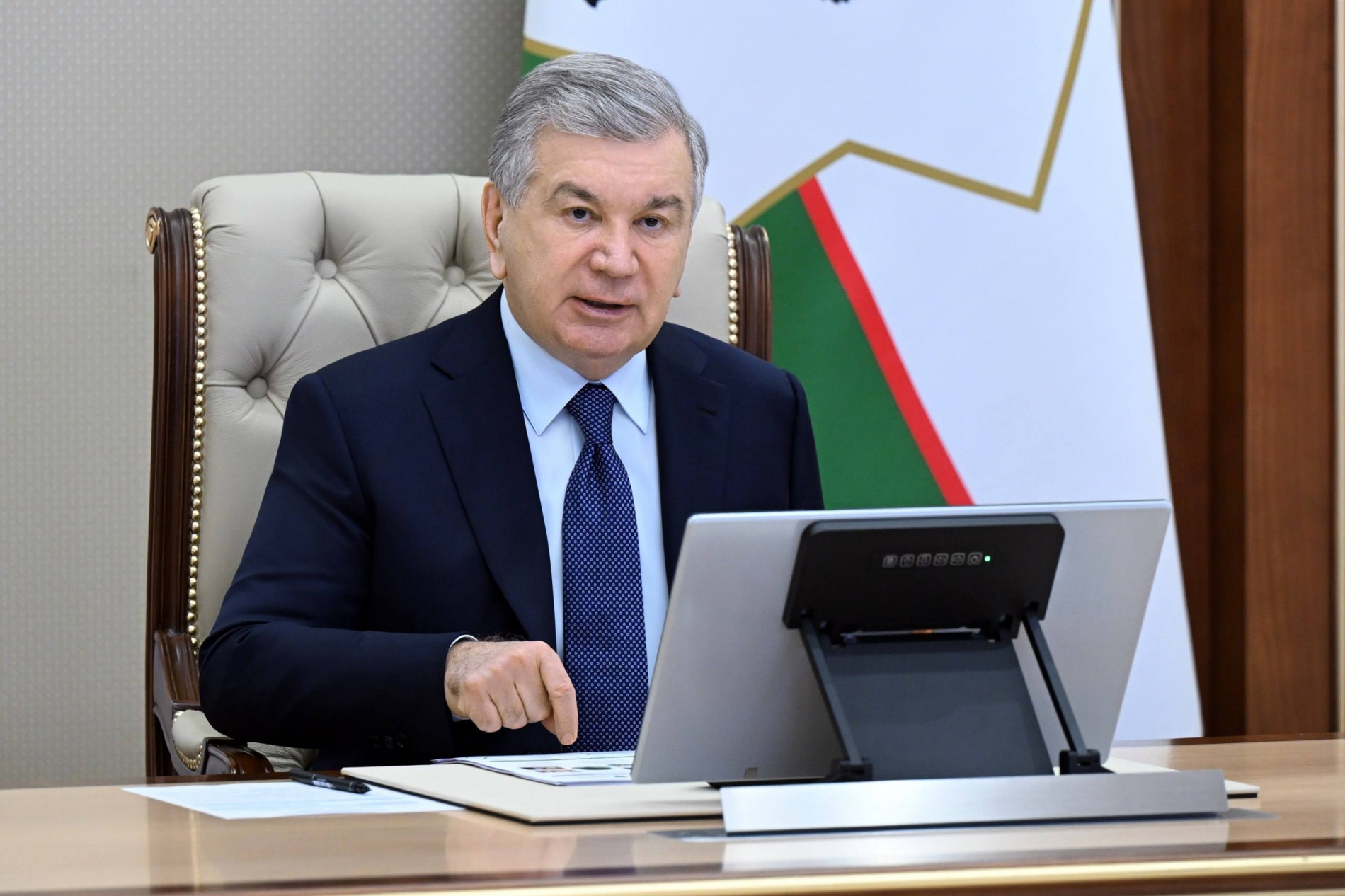
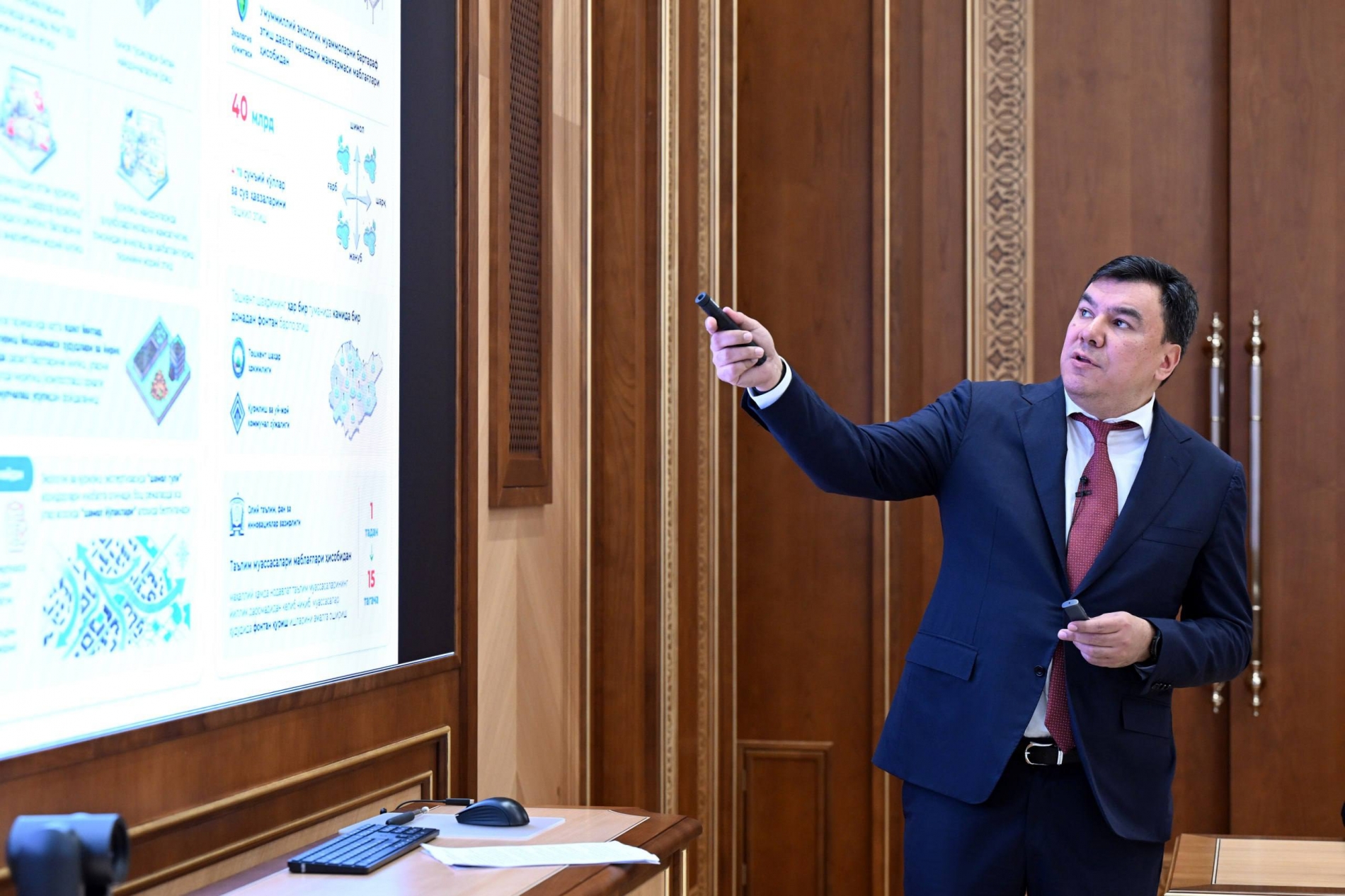
On March 23, President Shavkat Mirziyoyev reviewed a presentation on priority nationwide projects in the fields of ecology and environmental protection for 2026–2030.
Initiatives aimed at improving atmospheric air quality, expanding green areas in cities and regions, enhancing environmental education and culture, and strengthening the scientific and practical foundations for combating desertification were considered.
First, information was presented on the planned measures under the nationwide “Clean Air” project.
It was noted that cases of exceeding established air pollution standards are currently being recorded in Tashkent. A similar situation is observed in Navoi, Fergana, Chirchik, and Termez. The main contributing factors were identified as industrial growth, the widespread use of carbon-based fuels, the increasing number of vehicles, natural conditions, and insufficient regulatory control.
In this regard, key targets through 2030 have been defined, including reducing atmospheric pollutant emissions, increasing the share of captured emissions at industrial facilities, lowering transport-related emissions, and decreasing the number of days when PM2.5 levels exceed established standards.
It was noted that, as a result of prompt measures, air quality in Tashkent has improved to a certain extent. In particular, during January–February of this year, PM2.5 concentrations declined significantly compared to the same period last year. Regional programs will now be introduced in a phased manner, with each region conducting analysis and diagnostics, establishing a unified air monitoring system, and compiling an inventory of pollution sources.
Within the “Clean Air” project, particular attention is given to the energy and industrial sectors. Tax incentives and financial support are provided for enterprises that utilize alternative energy sources in their production processes, along with the widespread deployment of automatic monitoring stations, filtration systems, dust and gas purification equipment, and energy-efficient technologies. At industrial enterprises in Tashkent and adjacent areas, mandatory automatic monitoring posts will be installed, with data integrated into a unified geoinformation system. For entities that fail to comply with these requirements, compensation payments will be significantly increased.
Environmental requirements in the construction sector are also being strengthened. For large new facilities, it is envisaged to increase the share of green space in project design, ensure enclosed storage of construction materials, dispose of waste through special pipes and containers, secure sites with protective barriers, and install online surveillance cameras.
In addition, it was proposed to preserve wind corridors, ensure the mandatory consideration of environmental assessment findings during construction, and develop a master plan for managing the city’s environmental and water resources.
Specific measures to reduce the impact of natural dust have also been identified. These include the creation of a green belt around Tashkent, the establishment of protective green barriers in the Surkhandarya and Syrdarya regions to prevent dust storms, the development of artificial lakes and reservoirs, the expansion of fountains across the capital’s districts, and the processing of leaves into compost and mulch. These measures are expected to reduce the concentration of airborne dust particles and improve the urban environment.
Separate directions have also been defined in the transport sector. These include the phased tightening of fuel standards, the environmental classification of vehicles with the issuance of red, yellow, and green category stickers, the integration of environmental requirements into technical inspections, the implementation of vehicle fleet renewal programs, and the expansion of public transport. These measures are expected to reduce pollution from road traffic, particularly in the centers of major cities.
The issue of greenhouse farms was also considered as an important component of the “Clean Air” project.
It was noted that a large number of greenhouse farms are concentrated in Tashkent and the Tashkent region, with a significant proportion relying on coal, fuel oil, and other non-standard fuels for heating. Emissions of hazardous substances, including NO₂, SO₂, and PM2.5, have a substantial negative impact on air quality.Furthermore, due to comparatively lower levels of solar insolation in the Tashkent region than in other areas, greenhouse production costs are significantly higher. For example, while the average air temperature in Tashkent in January is +6°C, in Termez it reaches +10.8°C. The cost of producing one ton of greenhouse output amounts to 11.9 million soums in the Tashkent region, compared to 4.9 million soums in the Surkhandarya region.
Cultivating produce in regions with higher levels of solar insolation is advantageous both for the financial sustainability of greenhouse farms and for ensuring price stability in the domestic market.
In this regard, it was proposed to gradually relocate greenhouse farms from Tashkent and adjacent areas to regions with more favorable natural and climatic conditions and higher energy efficiency. In particular, plans envisage the establishment of an agropark of at least 940 hectares in the Sherabad district of Surkhandaryaregion. The district is characterized by high solar insolation, milder winters, and significantly lower heating costs, enabling a substantial reduction in production expenses.
From October 1, 2026, restrictions are planned on the establishment of new greenhouses in Tashkent and adjacent areas, while relocated farms will be provided with support in infrastructure, financing, and logistics.
The presentation also included information on the concept of botanical gardens and dendrological parks under the “Yashil Makon” program. As noted, botanical gardens are intended for the study, conservation, propagation, and display of both native and foreign plant species, whereas dendrological parks specialize in the introduction, acclimatization, and scientifically grounded care of trees and shrubs. According to the concept, botanical gardens will feature diverse floristic displays, greenhouses, nurseries, lakes, internal pathways, gazebos, and landscaped flower areas.
Currently, three botanical gardens operate in the country, while the project envisages the establishment of an additional 12 botanical gardens and 16 dendrological parks. For each region, the most suitable tree and shrub species will be selected, taking into account soil and climatic conditions.
By 2028, botanical gardens and dendrological parks with an area of at least 100 hectares are planned to be established in Karakalpakstan, all regions, and the city of Tashkent. As a result, by 2030, the country’s overall greening level is expected to increase from 14.2 to 30 percent, PM2.5 and PM10 concentrations to decline by 20–25 percent, and average air temperatures in climatically challenging areas to decrease by 1.5–2°C.
The concept for the creation of a National Dendrological Park in the capital was also presented. The total area of this major green space will be 108 hectares. The project envisages the planting of 50,000 trees and 100,000 shrubs. The park will contribute to biodiversity conservation, improved air quality, increased carbon absorption, the advancement of scientific research and breeding, as well as the enhancement of the urban microclimate. It is expected to reduce air temperatures by 2–4°C and increase humidity by 10–15 percent.
The National Dendrological Park is being developed not only as a green space, but also as a scientific, educational, and public hub. Plans include the creation of a “Trees of the World” zone, collections of plants representing six climatic zones, groves of fruit-bearing and native tree species, a medicinal plant garden, greenhouses, landscaped flowerbeds, recreational areas, pedestrian and cycling paths, parking facilities, and a visitor center.
In the central part of the park, a one-hectare artificial lake and a surrounding sakura garden are planned. The infrastructure will incorporate modern environmental technologies, including solar panels, benches and gazebos made from recycled materials, and an automated drip irrigation system. The park will serve as a natural laboratory for the Central Asian University for the Study of Environment and Climate Change (Green University) and as a center for ecotourism and environmental education for the public.
As part of the nationwide “Eco-Culture” project, it is planned to establish a new system integrating environmental education, science, and outreach activities.
It was noted that there is a shortage of specialists in this field who meet international standards, that the level of environmental awareness and sustainable practices among the population remains insufficient, and that there is a lack of personnel capable of implementing innovations and climate technologies in practice. In this regard, beginning with the 2026/2027 academic year, “green technical colleges” will be established in 14 regions as part of the Green University system, based on academic cooperation.
According to the project, student enrolment will increase annually, reaching 10,000 by the 2028/2029 academic year. New fields of study will be introduced in bachelor’s and master’s programs, including environmental and sustainable management, green economy, environmental engineering, climate change, desertification control, sustainable urban planning, and sustainable energy systems. A dual system will be introduced, combining theoretical knowledge with practical training. Significant funding is also allocated for the development of higher education, as well as for scientific and innovative projects and outreach activities.
To increase the environmental culture of the population, it is planned to revive the “10,000 Steps” initiative, launch the “Healthy Lifestyle” platform, and hold the GEF-8 Assembly and the international exhibition Eco Expo Central Asia 2026 in Samarkand.
A draft strategy for combating desertification was also reviewed separately at the presentation.
As noted, 70 percent of Uzbekistan’s territory belongs to the arid zone, with over 70 percent of the land subject to degradation. The deterioration of land resources causes an annual economic damage of $830 million. As a result of the drying of the Aral Sea, 3 million hectares of land have become unusable, and 56 percent of the territory is affected by wind erosion.
In this regard, it was proposed to establish a regional joint scientific research center at Green University. The center is expected to become the first scientific hub in Central Asia dedicated to managing desertification processes. Its structure will include 15 specialized laboratories, digital monitoring of land conditions will be implemented using satellite data, GIS, and remote sensing technologies, a genetic bank of drought-resistant plants will be created, and systems for chemical and physical soil analysis will be further developed.
This will enable the creation of a national system for forecasting and mapping desertification processes, the expansion of green cover in the Aral Sea region and other arid areas, the sustainable use of pastures, and the introduction of desert economy models.
The Head of State approved the proposed initiatives, noting the importance of the presented projects for ensuring environmental sustainability, protecting public health, further enhancing the quality of urban and rural environments, and promoting the broad application of science and modern technologies in this field.