
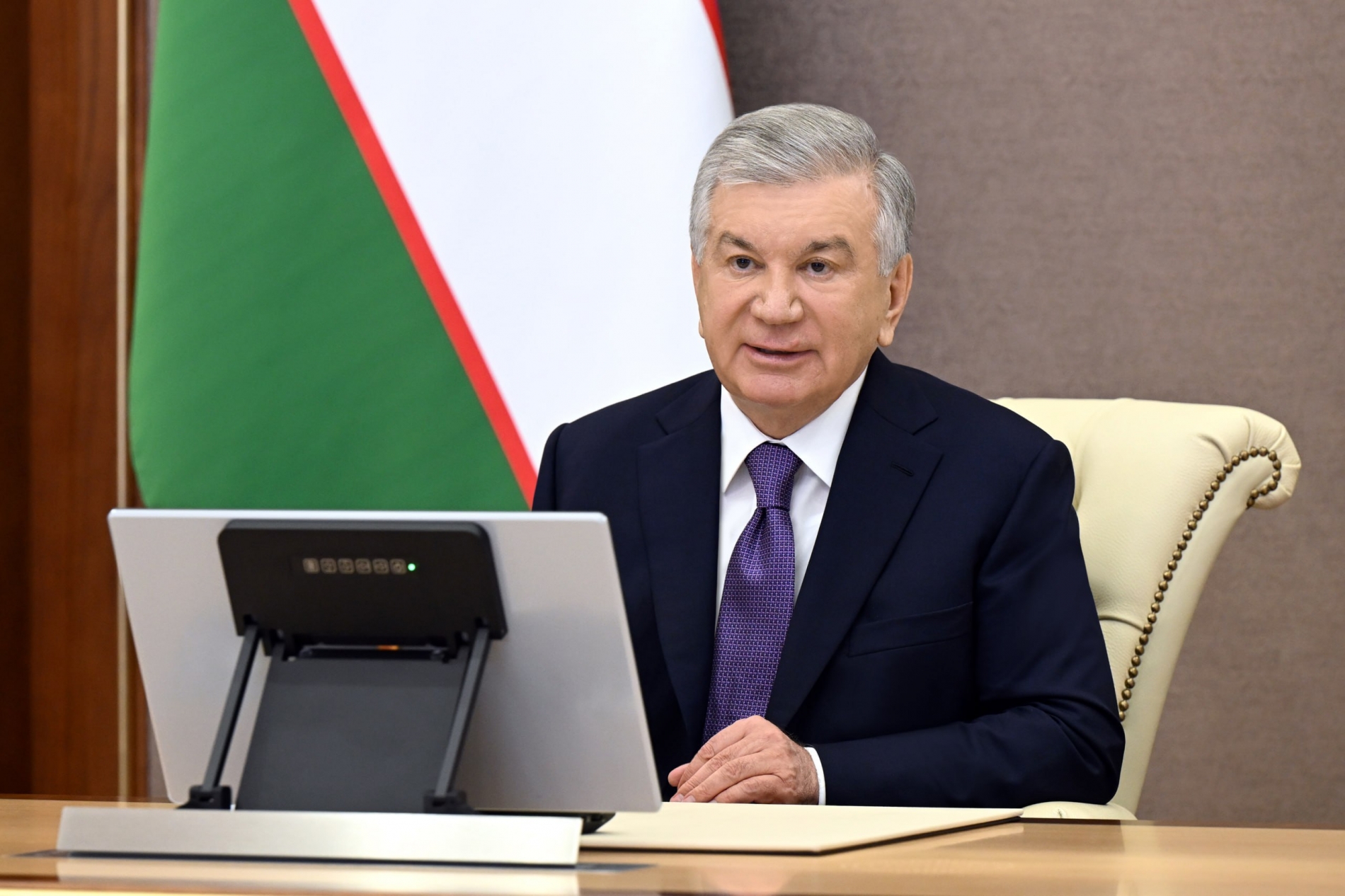
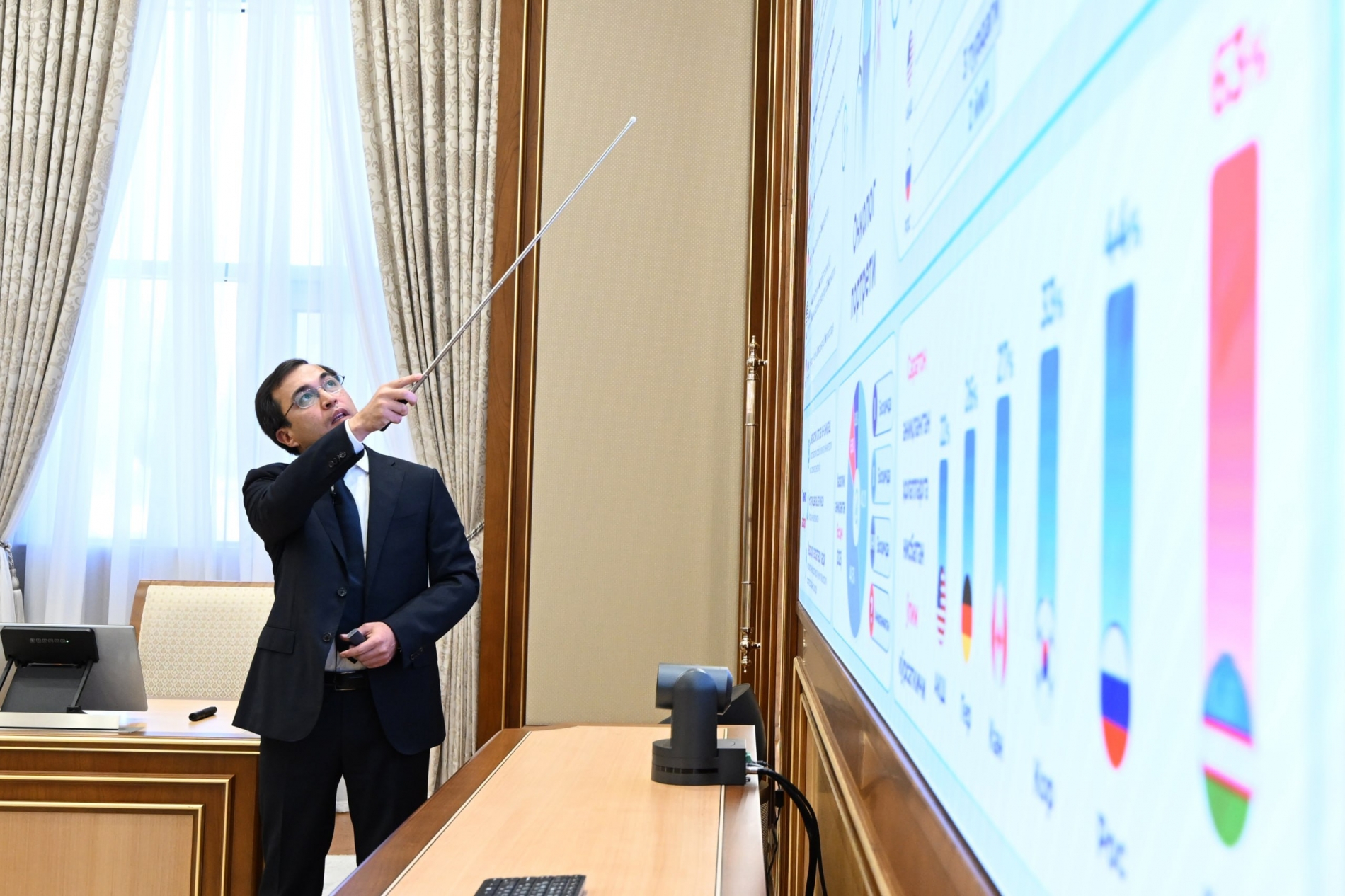
President Shavkat Mirziyoyev reviewed a presentation of proposals to improve the system of personnel training, state registration, and continuing professional education.
Large-scale efforts are underway in Uzbekistan to transform the healthcare system, improve the quality of primary healthcare, and expand access to modern clinical and diagnostic services. These reforms also require the training of medical and pharmaceutical personnel to be brought in line with modern requirements.
In this regard, the proposed reforms aim to shift medical education from the delivery of theoretical knowledge toward the development of competencies and practical skills, align educational programs with international standards, and establish an integrated system to ensure the objective assessment of specialists’ knowledge and qualifications and their professional development throughout their careers.
The presentation first addressed measures to improve the system of training medical and pharmaceutical personnel. The proposals were developed based on recommendations from the Universities of Cambridge, Pennsylvania, and Harvard, with the participation of international and local experts.
Going forward, admission quotas for medical universities will be determined based on the actual needs of regions and healthcare institutions, as well as personnel shortages. The Ministry of Health will approve the state admission quota by field of study.
Starting from the 2027/2028 academic year, it is proposed to introduce a six-year bachelor’s program in General Medicine to replace the existing Medical Treatment program. After five years of study, students will complete a full year of practical training. Graduates who successfully complete the program will be eligible to work as family physicians.
Particular attention will be given to training personnel in family medicine. Residents will combine their studies with practical training at family polyclinics. The training of specialized medical professionals will gradually be transferred to the residency system, while master’s programs will focus primarily on training research and teaching personnel.
New approaches will also be introduced to the training of mid-level medical personnel. The role of nurses with higher education will be enhanced as specialists who directly assist physicians in diagnosis, treatment, and prevention.
Pharmaceutical education will be more closely integrated with production. Measures have been identified to expand dual education based on the needs of enterprises, increase the share of practical training, and involve students in production processes – from drug development to quality control and standardization.
The next part of the presentation focused on introducing a state registration system for medical and pharmaceutical workers.
To ensure the quality and safety of medical services provided to the population, a system for the independent assessment of specialists’ knowledge and professional training will be introduced.
A unified electronic register covering all medical and pharmaceutical workers will be established. The register will be integrated with 16 information databases, bringing together information on specialists’ education, qualifications, and professional activities in one place.
It was proposed to introduce state registration on a voluntary basis from 2027 and make it mandatory from 2030. From then on, specialists who have not completed state registration will not be permitted to engage in medical or pharmaceutical practice.
The assessment will be conducted in stages: first in fundamental and clinical disciplines, followed by assessment in the relevant specialty. For this purpose, a unified bank of tests and assignments will be created, along with modern simulation facilities. Specialists who fail the examination will be given the opportunity to retake it.
Measures are also envisaged to incentivize workers who voluntarily join the new system at an early stage. In particular, it was proposed to provide bonuses of up to five times the minimum wage to physicians and pharmaceutical workers with higher education who successfully pass the examination and are included in the state register, and up to 2.5 times the minimum wage to mid-level medical and pharmaceutical personnel.
A separate center will be established to organize state registration and assess specialists’ qualifications.
The presentation also addressed issues related to improving the system of continuing professional education for medical and pharmaceutical workers.
The importance of regularly updating specialists’ knowledge and practical skills was emphasized, given the rapid pace of change in diagnostic and treatment methods, medicines, and technologies in modern medicine.
To this end, a new system of continuing professional education covering all medical and pharmaceutical workers will be introduced. Education providers and programs will be accredited, and the relevant processes will be digitized.
The system will operate on a credit-module basis. Medical and pharmaceutical workers with higher education will be required to earn at least 50 credits annually, while mid-level medical and pharmaceutical personnel will be required to earn 28 credits. These credits will be taken into account for state registration and the confirmation of professional qualifications.
Specialists will have the right to independently choose their education provider, program, and mode of study. They will be able to use both traditional and distance learning formats, including professional development through online courses, on-the-job training, seminars, and workshops.
A mechanism will also be introduced in Uzbekistan for recognizing credits earned through foreign programs and events that have received international accreditation.
It was proposed to establish a Center for Continuing Professional Development and assign it responsibility for ensuring the quality of education, accrediting providers and educational programs, and introducing modern standards.
Professional education programs will prioritize diseases that are most prevalent among the population and associated with a high risk of death. Modern educational programs in cardiology, emergency medical care, and oncology will be developed jointly with leading international partners.
President Shavkat Mirziyoyev emphasized the importance of integrating medical education, independent assessment, state registration, and continuing professional development into a single, interconnected system.
The Head of State issued instructions to introduce the new procedures in stages, widely apply international standards, and ensure that the reforms are primarily aimed at improving the quality of medical services and patient safety.