
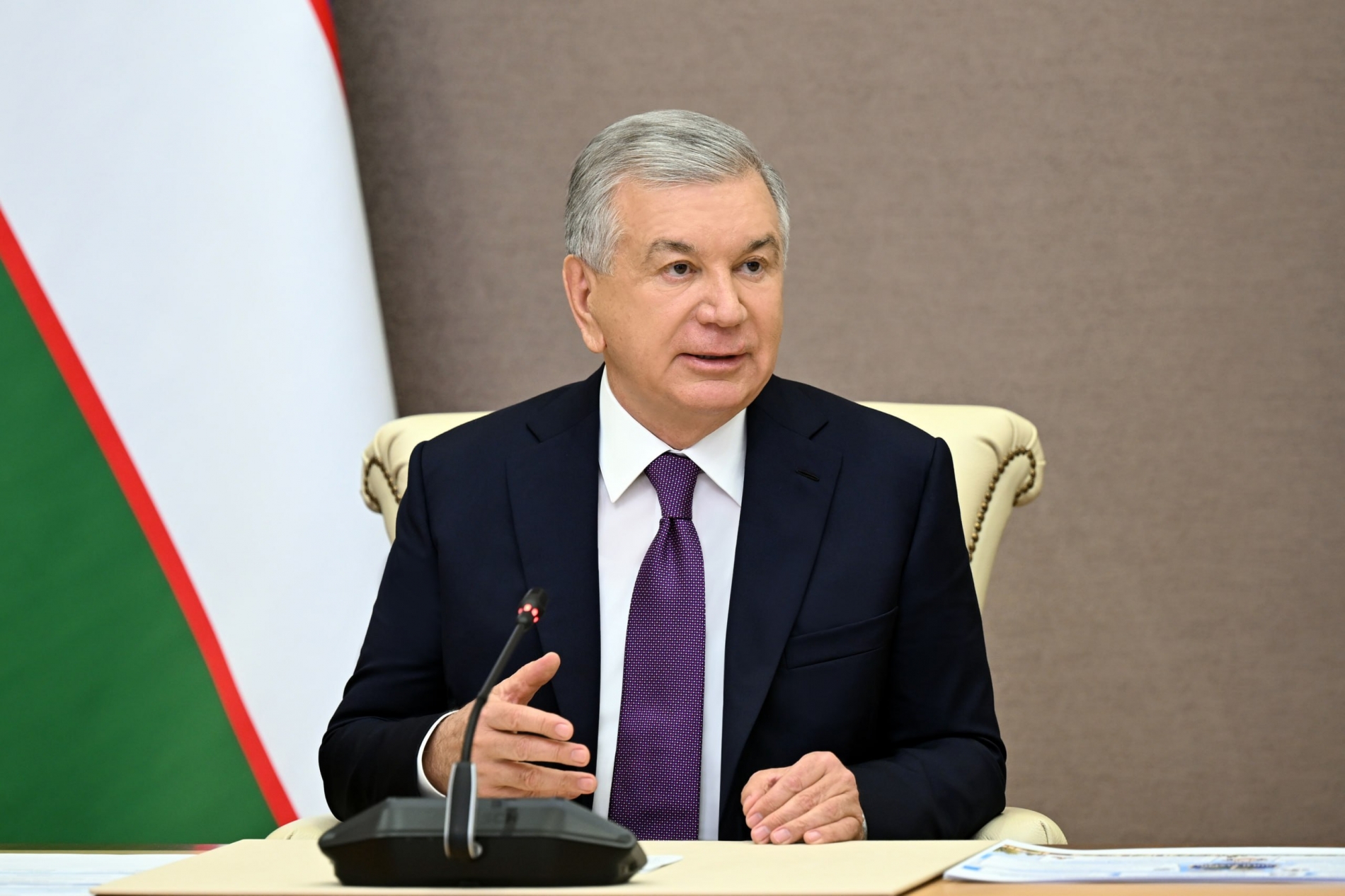
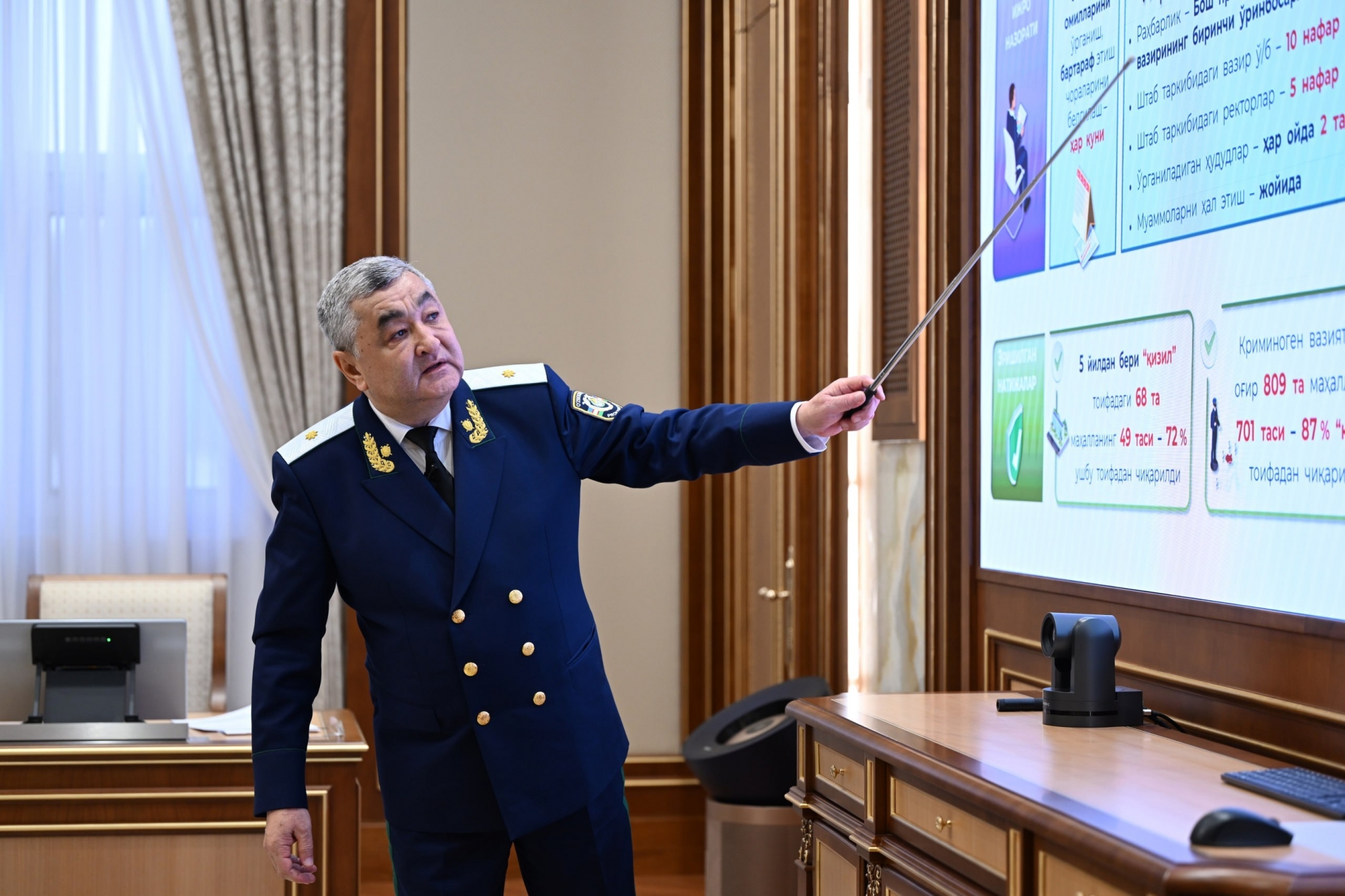
On November 4, President Shavkat Mirziyoyev considered proposals to improve the crime prevention system in line with modern requirements.
Uzbekistan is taking systematic measures to ensure public safety, prevent offenses, and create a stable social environment in mahallas.
In particular, security infrastructure across the regions is expanding. A total of 263,000 CCTV cameras with a recognition function, 70,000 modern intercoms, and 22,000 panic buttons have been installed. Thanks to social prevention measures, the problems of 2.1 million people have been addressed individually.
As a result, 701 of the 809 mahallas with the most challenging crime situations have improved and moved out of this category. Around 4,400 mahallas are now classified as “green.”
At the same time, changes in society, the rapid development of digital technologies, cybercrime, and other emerging threats require taking the crime prevention system to a new level.
In particular, although more than 20 amendments and additions have been made to the Law “On Prevention of Offenses,” adopted in 2014, some of its provisions no longer meet modern requirements.
In this regard, proposals to prepare and adopt a revised version of the law were considered during the presentation.
The Head of State emphasized that the new law should ensure a transition from taking measures after an offense has been committed to a proactive prevention model focused on the early detection and elimination of potential threats.
Although 14 government agencies are currently involved in crime prevention, in some cases their functions overlap and their powers are not clearly defined. During the presentation, it was proposed to add seven more agencies to the crime prevention system.
The President emphasized the need to clearly justify the feasibility of this proposal, define the tasks, powers, and responsibilities of each agency, and ensure effective cooperation among them.
In addition, the draft revised law provides for establishing the powers of the Commission for the Prevention of Offenses at the legislative level. The draft also focuses on strengthening mechanisms for coordinating the activities of government agencies and assessing and monitoring the effectiveness of preventive measures.
The draft law provides for defining new areas of prevention, particularly strengthening preventive measures to combat drug-related crimes, cybercrime, organized crime, the shadow economy, and corruption.
In addition, new provisions have been proposed to improve mechanisms for social and victimological prevention, expand preventive activities in educational institutions, and ensure the safety and social protection of citizens affected by crime.
Thus, the proposals aim to ensure the safety and social protection of victims and witnesses facing threats to their lives, health, or property, as well as to reward citizens who assist in combating crime. In addition, the proposals seek to establish a legal framework for issuing mandatory preventive orders aimed at eliminating the causes and conditions that contribute to the commission of offenses.
During the presentation, officials also focused on improving the system for assessing the crime situation and monitoring the effectiveness of crime prevention measures.
As noted, current assessment methods rely mainly on statistical data. At the same time, socioeconomic factors influencing crime rates are not adequately analyzed, and information systems are not fully integrated with one another.
In this regard, officials proposed introducing a new model for assessing the crime situation, which would, for the first time, establish a “crime resilience index” that takes into account citizens’ perceptions of safety and the level of latent crime.
To this end, the proposals include launching a unified crime data platform that will combine information resources from government agencies, use artificial intelligence technologies to analyze and predict crime risks, and generate crime maps.
Through these mechanisms, the crime situation in regions and mahallas will be assessed on an ongoing basis, and targeted prevention measures will be determined based on risk levels. The performance of responsible agencies will be evaluated based on performance indicators, and effective oversight of efforts to resolve identified problems will be established.
The Head of State emphasized that crime prevention must become a shared responsibility, requiring the combined efforts of law enforcement agencies, all relevant government bodies, mahallas, and the public.
He noted that the priorities remain creating a safe environment in every mahalla, promptly identifying and eliminating factors that contribute to offenses, and ensuring a peaceful and secure life for citizens.
The President instructed responsible officials to refine the draft law based on the comments and suggestions presented, clearly define the tasks and powers of agencies involved in crime prevention, and introduce digital analysis and monitoring mechanisms. He also signed a decree providing for the introduction of a new model for assessing the crime situation.