
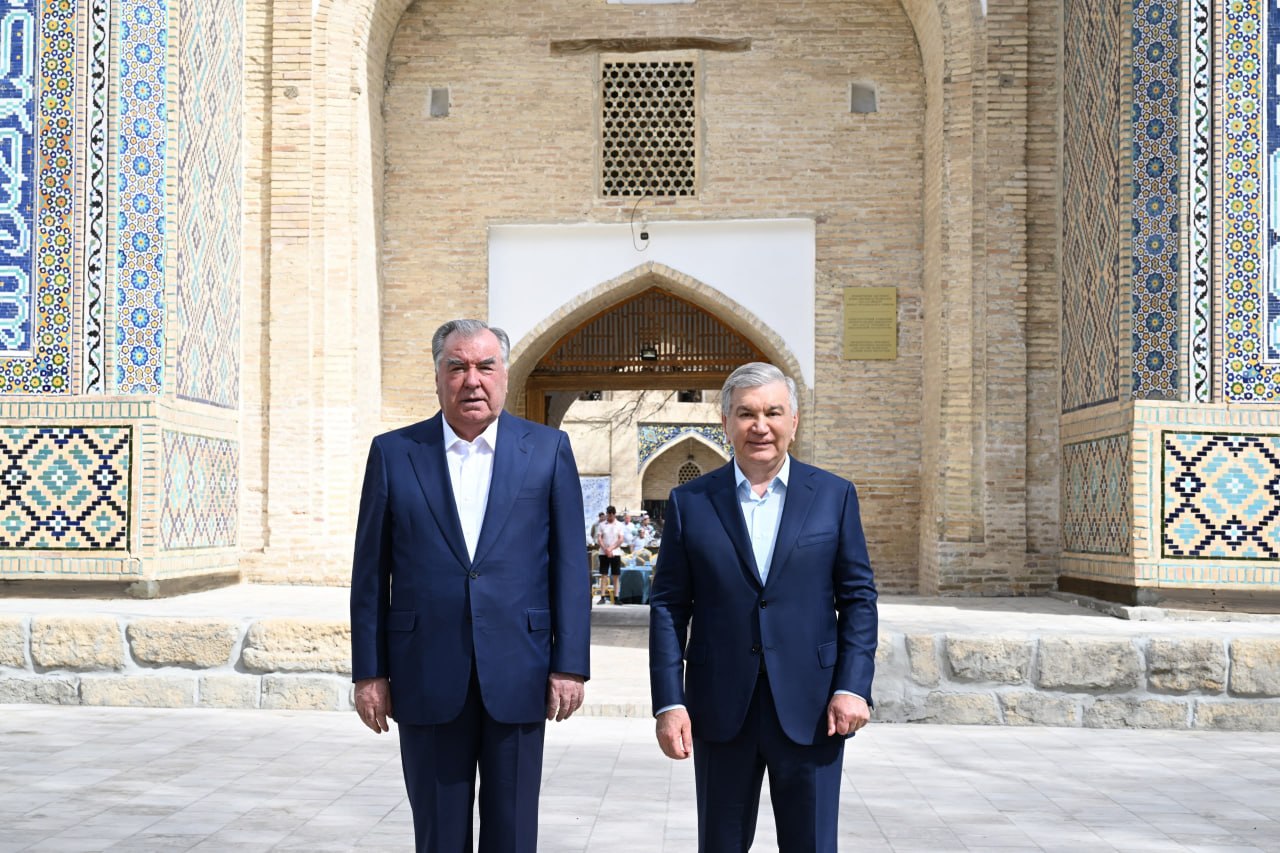
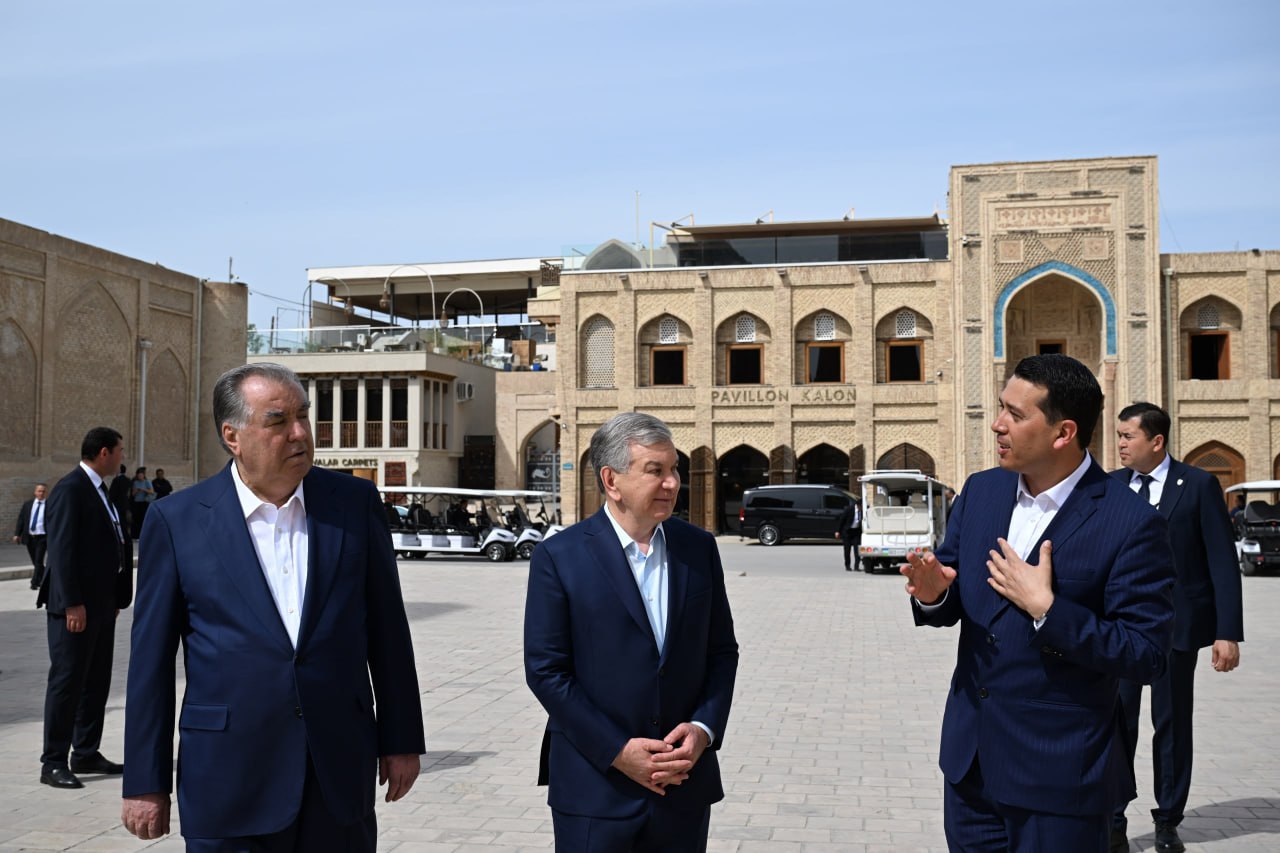
President of the Republic of Tajikistan Emomali Rahmon, together with President of the Republic of Uzbekistan Shavkat Mirziyoyev, visited the Ark Fortress, as well as the Poi Kalyan and Lyabi-Hauz ensembles.
The Ark Fortress is an ancient citadel of Bukhara that served as the residence of rulers for nearly one and a half millennia. Its earliest structures date back to the 4th–3rd centuries BC, while its present appearance was mainly shaped in the 16th century. In the past, it was a “city within a city,” comprising palaces, administrative buildings, and an arsenal. It was noted that in the Middle Ages, great thinkers such as Rudaki, Ibn Sina, and later Omar Khayyam lived and worked here.
The Poi Kalyan ensemble is of great interest as one of the most majestic and renowned architectural complexes in Bukhara. It includes the famous 45.6-meter-high minaret built in 1127, a congregational mosque erected in 1514 capable of accommodating up to 12,000 people, and the Miri-Arab Madrasah, considered one of the most prestigious Islamic educational institutions. The 288-domed gallery surrounding the mosque’s courtyard, hundreds of columns, and its unique acoustics give the ensemble a distinctive grandeur.
The Lyabi-Hauz ensemble is one of the few surviving medieval squares in Bukhara, with an ancient reservoir at its center. For centuries, it had been a place where people gathered to rest, converse, and trade. The ensemble comprises the Kukeldash Madrasah, as well as the Nadir Divan-begi Madrasah and Khanqah.
The President of Tajikistan viewed with great interest the artistic harmony of each monument, samples of national craftsmanship, and historical exhibits. The distinguished guest was provided with detailed information about the features of the architectural style, as well as the meaning of the ornaments and symbols.
These historic sites, reflecting Bukhara’s rich history, its role along the Great Silk Road, and its significant contribution to the development of science and culture, left a deep impression on the Tajikistan delegation.