
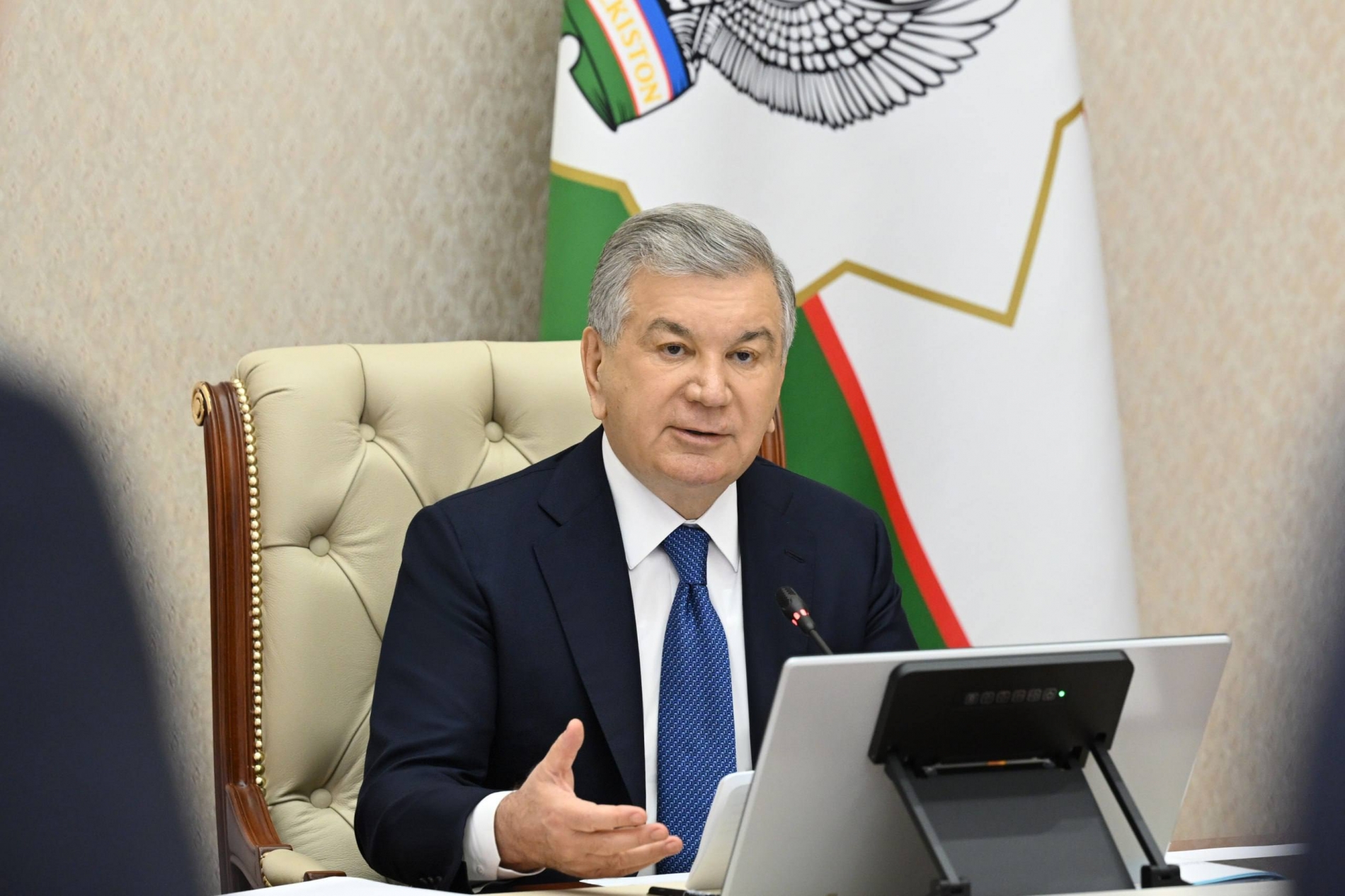
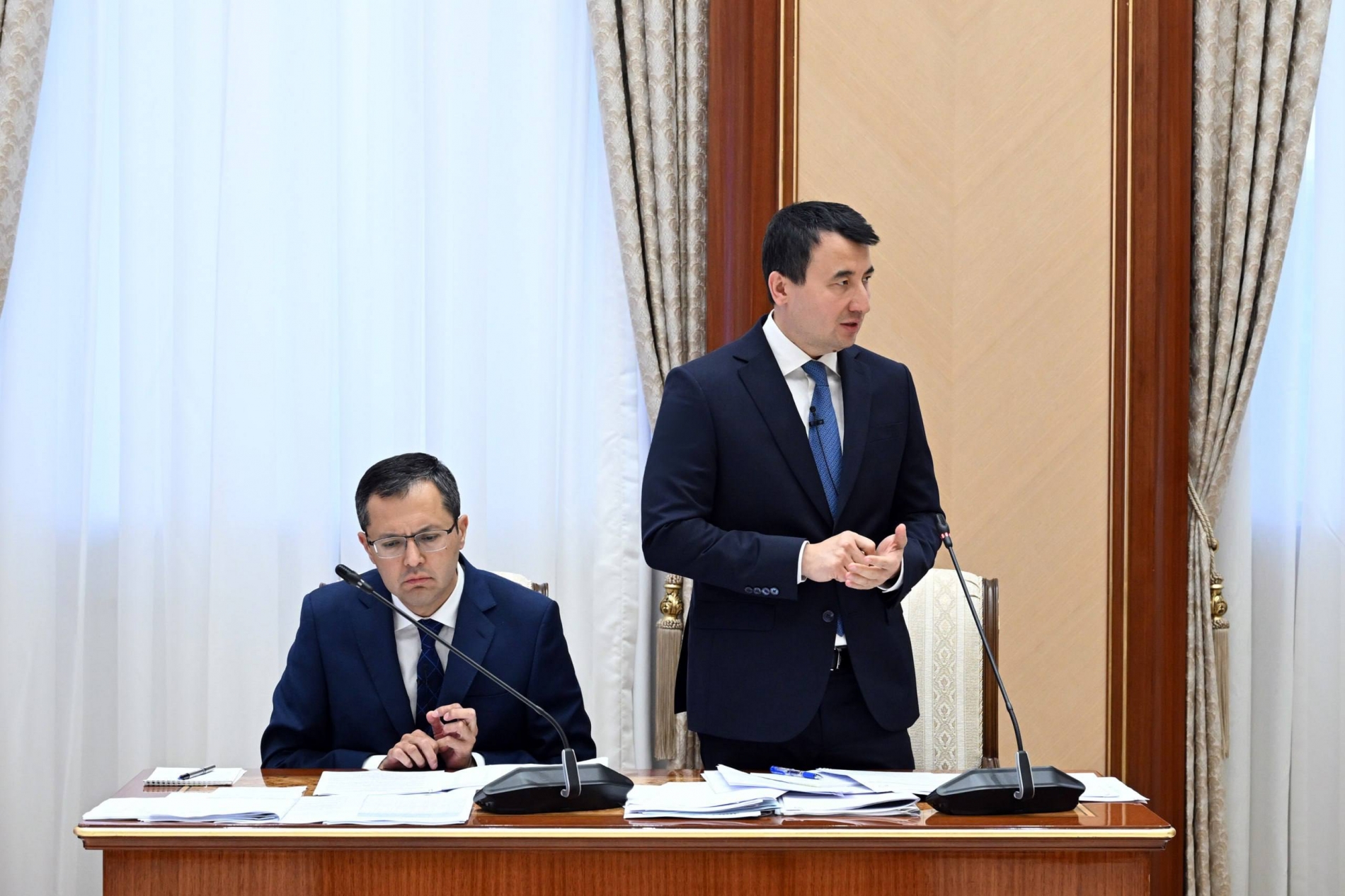
President Shavkat Mirziyoyev was briefed on measures to ensure projected economic indicators for the first quarter of 2026 and to mitigate the adverse impact of global market instability on the national economy.
In the first two months of the year, industrial output grew by 7.7 percent, while the services sector expanded by 15.4 percent. Exports totaled $3.5 billion, and $8.3 billion in foreign investment was attracted.
Since the beginning of the year, an additional 2.3 trillion soums and $500 million have been allocated from the state budget to support the socio-economic development of nine regions. A total of 3.9 trillion soums has been allocated to local budgets for 33 districts and 330 mahallas granted “New Uzbekistan” status. A further 3.9 trillion soums, along with 1.3 trillion soums from local budgets, has been directed to 37 challenging districts and 903 mahallas. At the initial stage, 1 trillion soums has been allocated for the implementation of 283 driver projects.
By the end of the year, a total of 1.2 trillion soums will be allocated for projects to develop infrastructure in high-traffic streets, coastal, and roadside areas, 450 billion soums will be directed toward improving infrastructure in 150 mahallas with high tourism potential, and 150 billion soums will be allocated for the establishment of 50 industrial micro-centers across 400 mahallas.
At the same time, it was emphasized that the rapid escalation of the international situation is placing additional pressure on the stability of key economic sectors, foreign trade routes, and import prices. It was noted that, under such conditions, heads of sectors and regions must assess the situation in advance and act proactively based on various scenarios.
The importance of keeping inflation within the 6–6.5 percent target range this year was emphasized.
In particular, it was noted that the sharp increase in global oil prices is affecting the cost of transport services and petrochemical products, with price increases also observed for polyethylene and polypropylene.
In this regard, the task was set to take prompt measures to import essential food products, address transport and logistics issues, and utilize alternative routes.
In addition, the importance of promptly addressing entrepreneurs’ challenges related to raw materials, market access, and credit was emphasized.
It was noted that transport and logistics remain one of the main issues raised by exporters, with disruptions in export shipments and rising costs amid current global developments causing serious concern.
In this regard, instructions were given to strengthen cooperation with neighboring countries on transport and trade, to organize the export of food products by air, and to introduce preferential tariffs for entrepreneurs.
The issue of foreign investment was also discussed in detail. It was noted that the tense international situation could affect the implementation of certain projects. In this regard, instructions were given to continuously analyze each implemented project and establish a daily dialogue with investors.
The dynamics of loans allocated to support businesses in the banking and financial sector were also reviewed.
The Head of State stressed that, despite the positive dynamics, no leader has the right to become complacent. It was noted that, in the current difficult situation, it is necessary to identify risks in advance, to work on the basis of clear plans to minimize them, and to promptly resolve emerging problems in sectors and regions without waiting for them to escalate.
Responsible officials were given specific instructions to curb inflation, ensure industrial and export performance, accelerate the implementation of investment projects, and eliminate potential risks in the banking system and construction programs.