
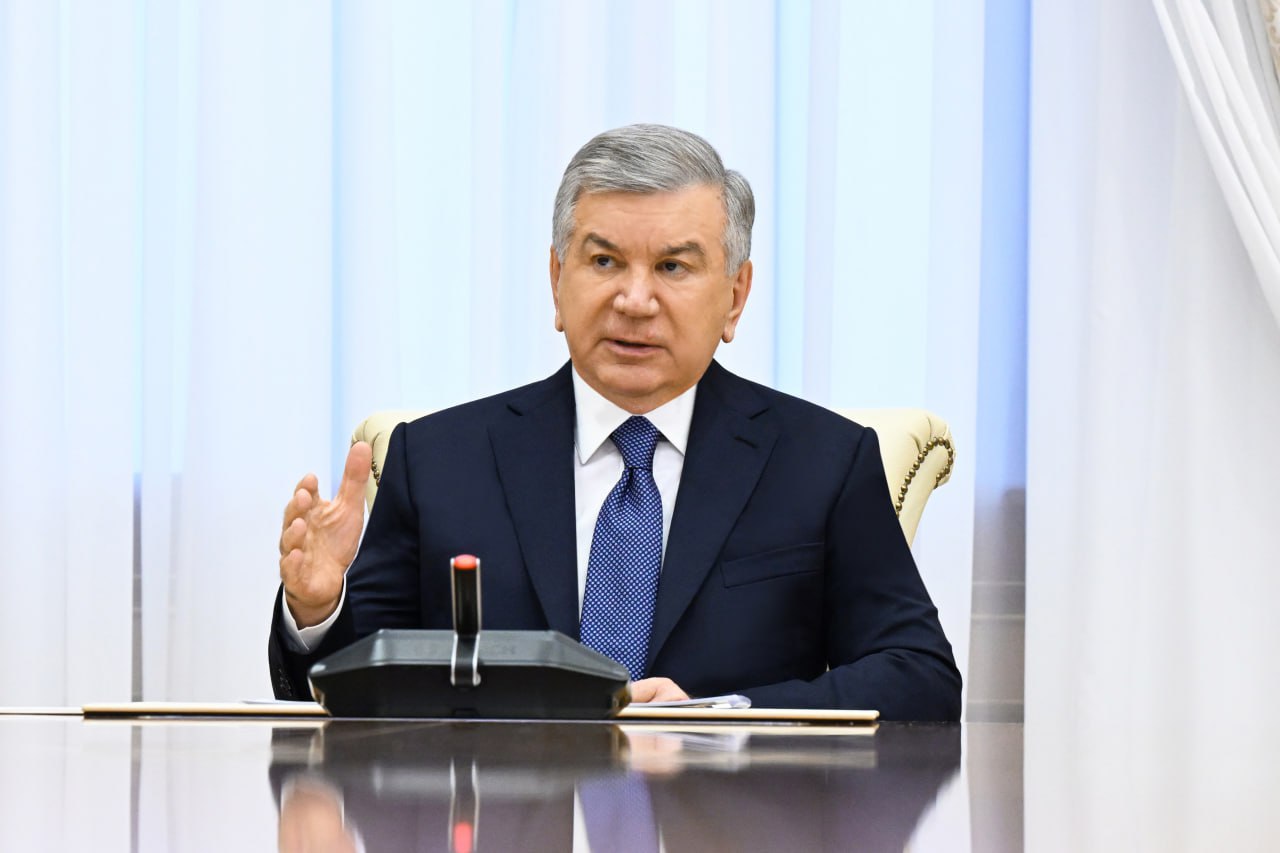
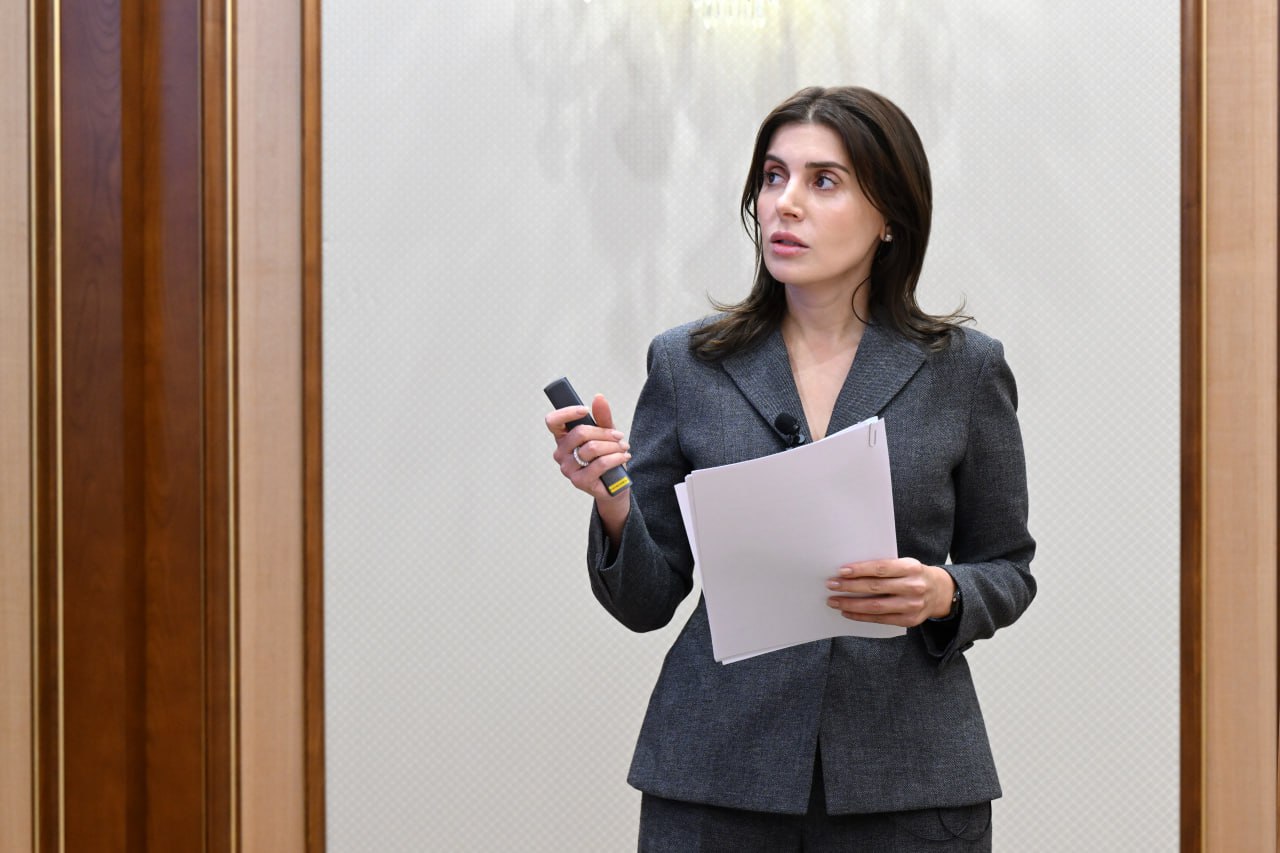
President Shavkat Mirziyoyev was briefed on proposals to develop the creative economy, modernize cultural infrastructure, and establish new creative spaces.
Today, the creative economy has become one of the main drivers of growth in many countries. This sector accounts for 3-7 percent of the global gross domestic product. In Uzbekistan, the creative economy accounted for 3.7 percent of GDP in 2024, equivalent to 56.8 trillion soums. Exports reached $770.6 million, and the sector employs more than 319,000 people.
The fact that more than 60 percent of the population is young, combined with the rapid development of digital infrastructure and a rich cultural heritage, creates a strong foundation for accelerated growth in this sector.
To this end, a dedicated law on the creative economy was adopted in 2024, creating a legal framework for the sector. A Creative Industries Park was established, along with a special tax regime for its residents. Specifically, income and social tax rates were reduced from 12 percent to 6 percent. Additional incentives were introduced to support entrepreneurs in the industry.
Through these measures, it is planned to increase the share of the creative economy in GDP to 5 percent, or 145 trillion soums, raise exports to $1 billion, and provide employment for more than 500,000 people in the sector by 2030.
The presentation reviewed the concept of the Creative Industries Park, which will be located in Tashkent. Its territory will feature a park, art installations, the Tashkent school of an international programming network, a book café, sports grounds, art pavilions, co-working spaces and offices, film and video production zones, a recording studio, a creative industries campus, and a hotel for youth and creative professionals. The project will be implemented on the basis of a public-private partnership.
There are also plans to create creative parks in the territory of New Tashkent and the city of Nukus.
The park in New Tashkent will house rental spaces for creative residents, studios, media and conference halls, and commercial and service facilities, while the existing pavilion in Istiklol Park in Nukus will be reconstructed and transformed into a multifunctional public and cultural center.
The creative park project in Nukus is notable in that Uzbekistan’s national pavilion from EXPO-2025 will be relocated there. A modern library will be built adjacent to the site.
The activities of cultural centers were critically analyzed.
It was noted that more than half of the republic’s over 800 cultural centers require renovation. It was also emphasized that most centers continue to operate under outdated models, largely limiting their activities to festive events.
In this regard, a pilot project has been developed to advance cultural centers based on modern standards. The project includes four centers in Tashkent, Kokand, Bukhara, and Samarkand, the first of which is being established at the Gulshan Cultural Center in Tashkent. It will host clubs, workshops, studios, and hobby groups in various fields based on the “culture – education – leisure – dialogue” principle.
During the presentation, plans were reviewed to establish a Higher School of Traditional Arts in Tashkent, based on the experience of a school of the Royal Foundation of Great Britain.
The Higher School will offer bachelor’s and master’s programs in ceramics and brickwork, decorative painting, wood carving, architectural calligraphy, geometric and biomorphic ornamentation. Instruction will be conducted in English under a two-year program. It is planned to train 50 specialists by 2027, with the institution reaching an annual graduation capacity of 80 qualified professionals by 2031.
The presentation also reviewed projects for the establishment of a National Institute of Restoration, the restoration of the Bibi-Khanym Mosque in Samarkand, and the renovation of the summer amphitheater at the Turkiston Palace of Arts. It was noted that all design and restoration work must be carried out in full agreement with UNESCO.
Noting the strategic importance of developing the creative economy for both the cultural sphere and the economy as a whole, the Head of state instructed to ensure the high-quality implementation of the planned projects.