
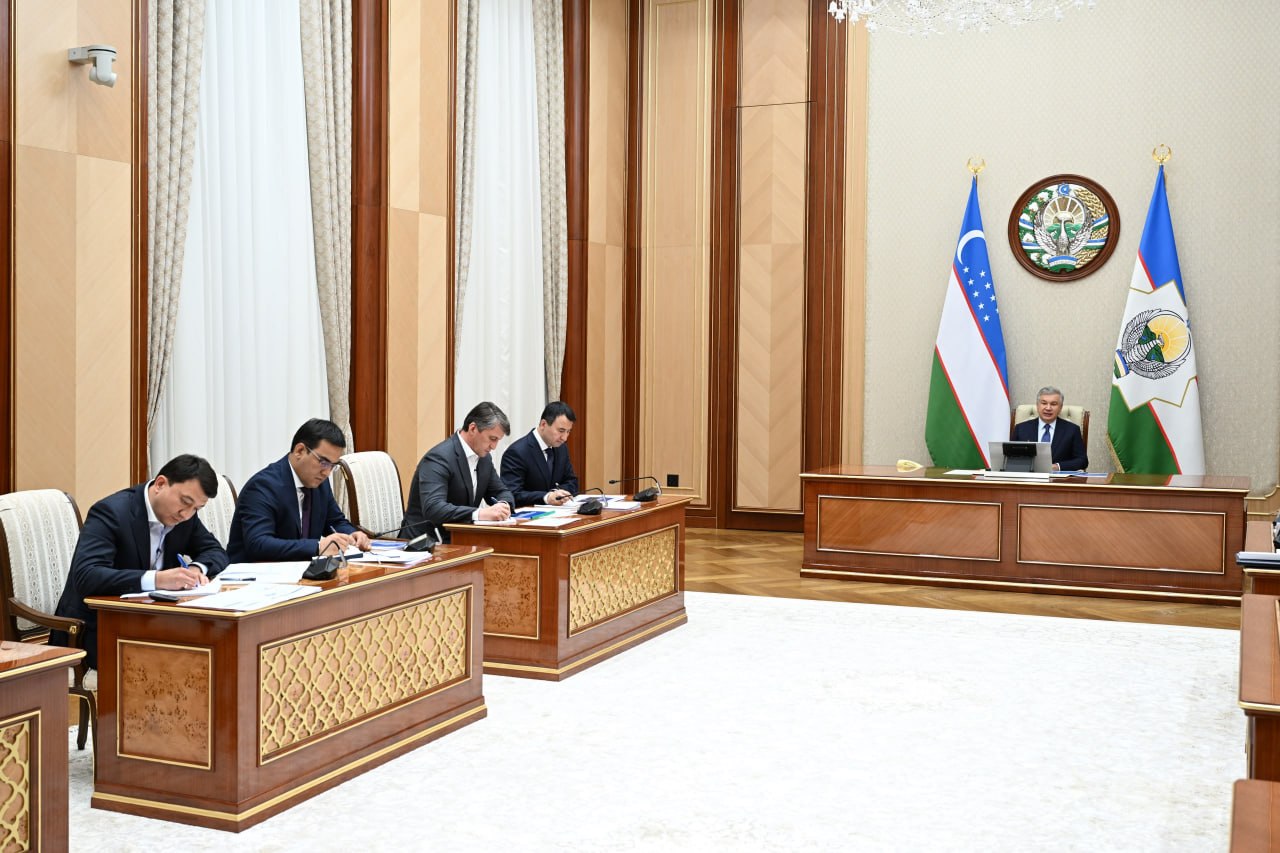
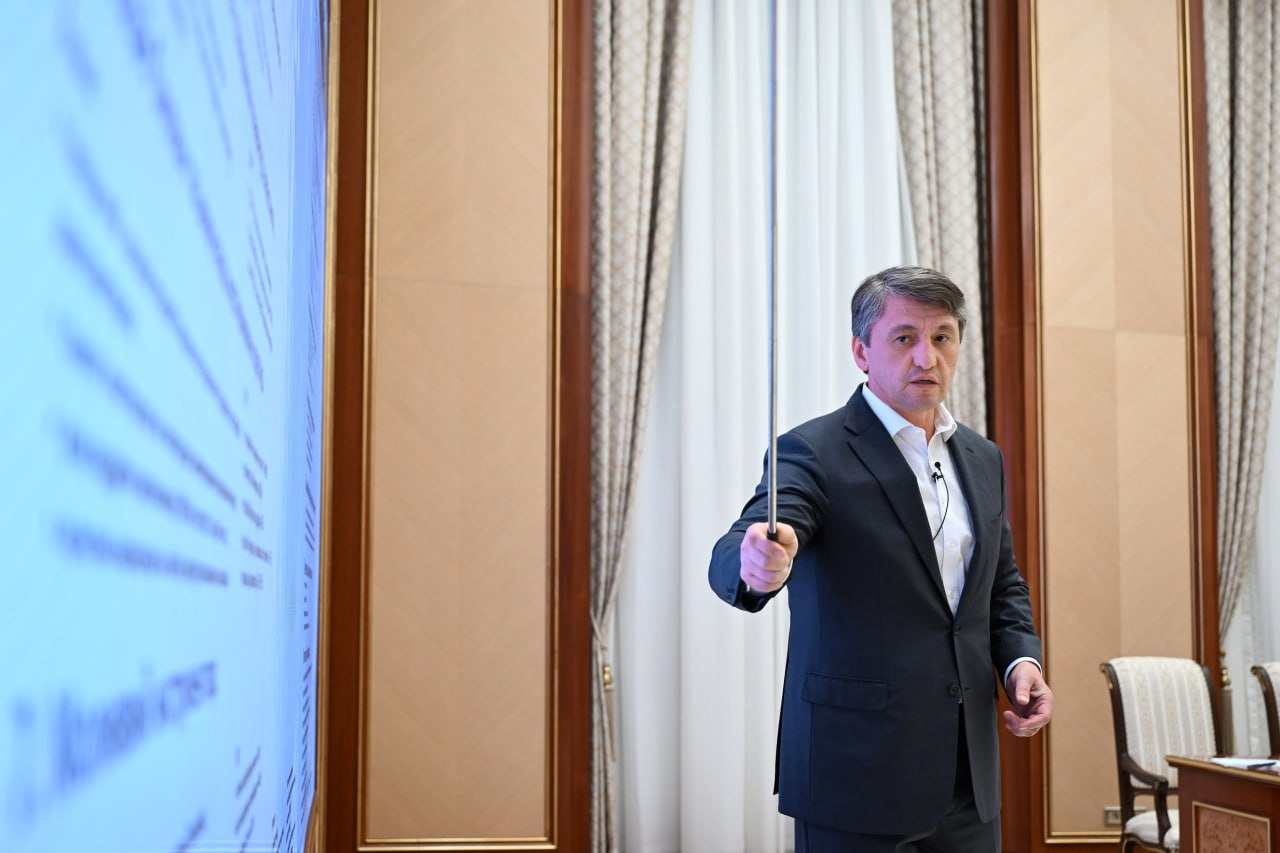
President Shavkat Mirziyoyev chaired a meeting on ensuring high economic growth in Tashkent, fully utilizing existing reserves, and further expanding favorable conditions for entrepreneurial activity.
It was noted that the current global environment and shifts in foreign markets could negatively affect export chains and delivery timelines. In this context, the priority task is to identify and promptly mobilize additional reserves.
The capital holds a special place in the national economy, accounting for 21 percent of the country’s gross domestic product. The current year has been declared the “Year of Accelerated Development of the Capital and Growth of Public Income,” and ambitious goals have been set to ensure 12 percent economic growth, achieve exports of $3.6 billion, attract $9 billion in investment, and provide employment for 616,000 people.
The city’s khokim, together with his 12 deputies and the heads of the 12 districts, must organize proactive efforts to offset a possible slowdown in industry, exports, investment, and tourism. The President emphasized that the capital has sufficient labor resources and financial capacity to achieve this.
This year, under a new approach, the city’s 12 districts will be specialized in specific industries and service sectors.
In particular, Bektemir district will focus on the chemical industry and wholesale trade; Mirzo-Ulugbek on the cable industry, science, education, and IT; Mirabad on the food industry, tourism, and public catering; Uchtepa on jewelry, household services, and retail trade; Chilanzar on pharmaceuticals, trade, services, and sports; Shaykhantakhur on furniture production and gastronomic tourism; Yunusabad on the paper industry and tourism; Yashnabad on electrical engineering and transport and logistics; Yakkasaray on light industry and financial services; Yangikhayot on automotive and logistics; Almazar on construction materials production and education; and Sergeli on metallurgy, logistics, and automotive services.
Over the past two weeks in Tashkent, meetings were held with more than 23,000 entrepreneurs to develop non-standard solutions. These consultations identified over 1,300 issues and generated 162 new proposals and initiatives. It was emphasized that none of the issues raised or proposals put forward should be left without attention.
The capital aims to create a new investment and business environment. In particular, it is planned to delegate authority for issuing business permits and licenses from relevant ministries and departments to their territorial divisions, introduce new approaches to supporting exporting enterprises, create a system for the prompt resolution of entrepreneurs’ logistical problems, and develop financing mechanisms on preferential terms to expand working capital and business activity.
It was proposed to establish a separate Coordination Council for the prompt resolution of entrepreneurs’ issues and proposals. The Council will be tasked with developing districts based on driver industries, continuously monitoring the economic and social situation, identifying growth points and untapped reserves, eliminating systemic barriers, and forming, financing, and implementing ideas and initiatives.
Overall, the task was set to mobilize all available opportunities to ensure additional production worth 88 trillion soums, exports of $4.9 billion, the attraction of $5 billion in investment, budget revenues of 2.9 trillion soums, and the creation of 65,500 high-income, permanent jobs.
It was also proposed to issue the capital’s Eurobonds to attract an additional $500 million to Tashkent this year.
Instructions were given to approve a program to expand localization and cooperation, linking the capital’s entrepreneurs with major industrial enterprises in the Tashkent, Navoi, Kashkadarya, Andijan, Bukhara, and Fergana regions.
The need was also highlighted to conduct a comprehensive analysis of Tashkent’s economy and to develop a strategy for its future development with the involvement of leading international consulting firms.